Late-night habits
Why late-night scrolling in bed leads to porn, and how to break the loop
Fine all day, then losing control the moment the lights go out? Here is why tired brains use porn as a sleep aid or stress valve—and how to change the last 30 minutes of your night.
Prepared by Transform · Published · Updated
Short answer Late-night slips rarely happen because of high sexual desire. More often, an exhausted brain uses porn as a fast, zero-effort way to quiet racing thoughts or fall asleep. Instead of counting on midnight willpower, move your charger out of reach, set nighttime app limits while you are still clear-headed, and replace visual scrolling with audio or slow breathing.
You probably know the routine by heart: all morning and afternoon, you barely think about porn. You get work done, feel in control, and figure today will be easy. Then 11:30 p.m. rolls around. You turn off the lights, get under the covers, and unlock your phone just to unwind for a few minutes—only to find yourself opening a private tab half an hour later.
Staring at the clock at 1:45 a.m., it is easy to wonder why your resolve evaporates every single night. The short answer: lying in a dark bedroom with a glowing screen in your hand is the hardest possible place to rely on willpower.
It is usually not about desire—it is about shutting your brain off
If you pay attention to how you feel right before a late-night slip, you are rarely full of energy. Usually you are wiped out, wired from a long day, or dreading tomorrow’s to-do list.
In that state, porn acts less like romance and more like a cheap, instant sedative. It asks nothing of you, drowns out anxious thoughts with a spike of intense stimulation, and leaves you physically drowsy afterward. Once your brain learns that shortcut, every bout of insomnia or bedtime restlessness starts masquerading as an urge.
Why midnight willpower almost always loses
After sixteen hours of making decisions, dealing with work, and holding yourself together, your capacity to weigh long-term goals against immediate relief is running on fumes. At 2 p.m., you can easily shrug off a passing thought. At midnight, your brain defaults to whatever brings the fastest comfort.
On top of that, a dark bedroom checks every high-risk box at once: you are alone, nobody is watching, you are warm and comfortable, and the screen is six inches from your face. Expecting sheer grit to save you in bed is like keeping a plate of warm cookies on your pillow and hoping you will not eat them.
- Decision fatigue: the more tired you are, the harder it is to pause and talk yourself out of an impulse.
- Revenge bedtime procrastination: when your daytime hours feel owned by work or obligations, staying up late scrolling feels like the only time that belongs to you.
- A learned cue: if you always watch in bed, your mattress stops being a cue for sleep and becomes a cue for opening a browser.
The 30-minute rule: let your 10 p.m. self protect your midnight self
The trick to beating late-night urges is making the decision at 10 p.m., while you are still standing up and thinking clearly. Pick one physical change for tonight:
- Plug your phone in across the room: even a desk or dresser two meters away changes the game. Having to throw off the covers and stand up on a cold floor gives your brain the five seconds it needs to wake up and reconsider.
- Buy a cheap standalone alarm clock: the number one excuse for keeping a phone on the nightstand is “I need my alarm.” A ten-dollar bedside clock removes that excuse for good.
- Schedule nighttime limits before you get into bed: if your phone has to stay nearby, use iPhone Screen Time or Transform’s protection rules to put a pause screen on browsers and late-night social apps after a set hour.
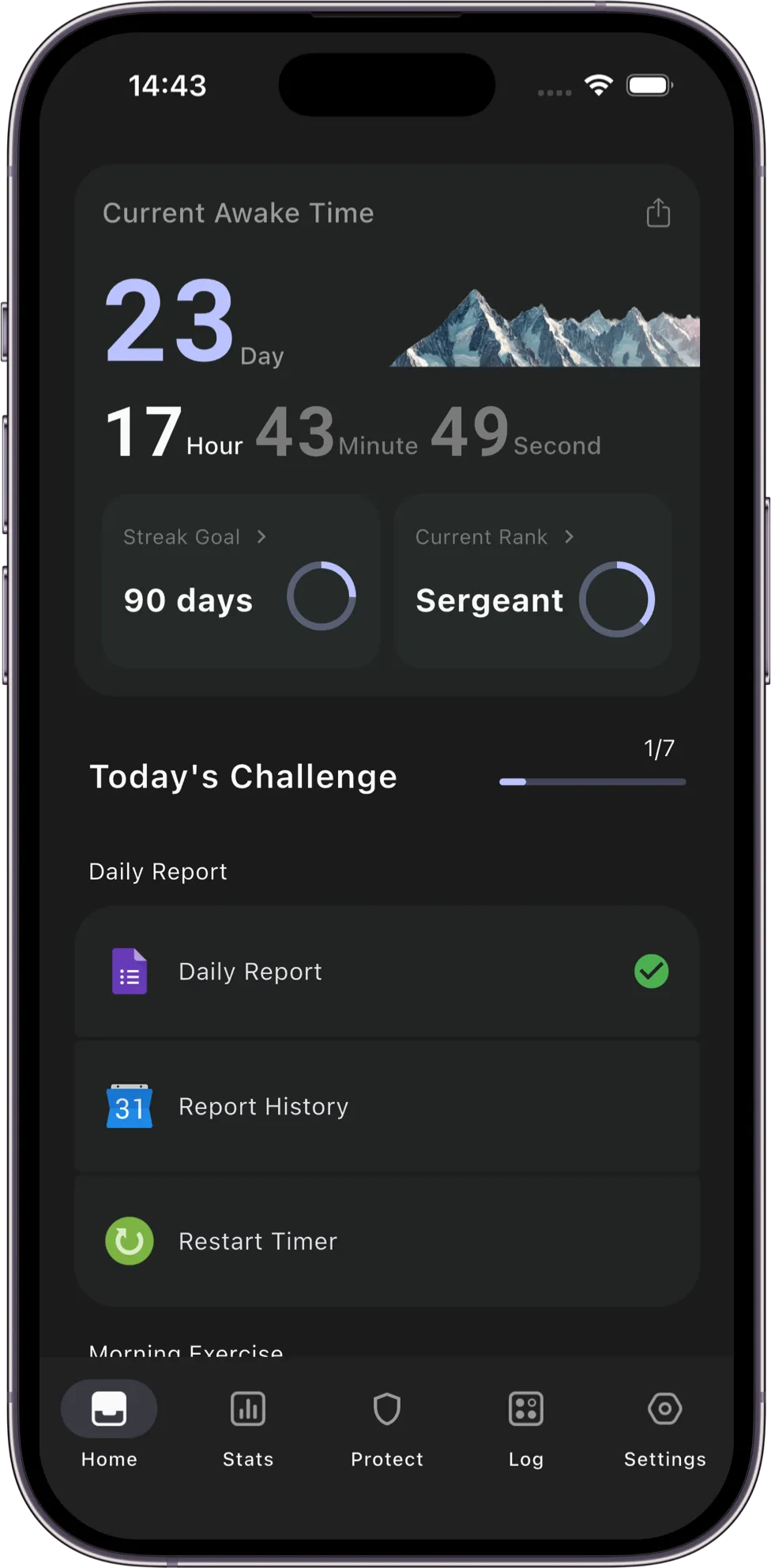
- Create a clear “lights-out” ritual: check in for the day inside Transform, plug the phone in away from the bed, and treat that moment as the end of screen time for the night.
What to do when you are lying awake and restless
The first few nights you put your phone away, you might lie there staring at the ceiling with a restless mind. That discomfort is often the exact moment people get up and grab the phone again.
Sleep researchers recommend a simple rule: if you have been lying in bed wide awake and frustrated for more than 20 minutes, sit up or move to a dim chair until your eyelids actually feel heavy. Give your brain a calmer way to wind down:
- Switch from eyes to ears: listen to a dry podcast, an audiobook, or brown noise with the screen face-down so there is no visual feed pulling you in.
- Slow your exhale: breathe in for 4 seconds and out for 6 seconds for two minutes to signal to your nervous system that the day is over.
- Dump tomorrow’s worries on paper: if unfinished tasks are keeping you up, jot down the top three things for tomorrow morning on a notepad so your brain stops looping on them.
Frequently asked questions
What if I cannot fall asleep without watching porn first?
It is completely normal to take longer to fall asleep for the first few nights when you drop a habit your body used as a sleep cue. Keep your wake-up time steady in the morning, dim the lights an hour before bed, and use audio or slow breathing to wind down. Your natural sleep drive usually catches up within a few days.
Do I have to leave my phone in another room?
Leaving it in the living room or kitchen works best, but if you live with roommates or family, plugging it in across your bedroom—somewhere you cannot reach without standing up—is usually enough to break the half-asleep scrolling reflex.
What if an urge hits while I am already in bed?
Sit up and put both feet on the floor immediately. Changing your posture breaks the trance-like state of lying in the dark. Walk to the bathroom for a glass of water or run through a two-minute breathing exercise in Transform before lying back down.
Why are Friday and Saturday nights so much harder?
Without an early alarm the next morning, there is no clear cutoff time, so casual scrolling easily stretches past 1 or 2 a.m. Give weekends a set “phone-on-the-charger” time too, even if it is an hour later than on weeknights.
Do not worry about fixing your entire sleep schedule tonight. Just move your charging cable two meters away from the bed right now—before you get tired.
Sources and further reading
- Sleep Foundation: How Electronics Affect Sleep
- American Academy of Sleep Medicine: Healthy Sleep Habits
This guide offers general self-help information. It is not medical advice, therapy, or crisis support.